
Key points.
Two units are not compared by brand, but by capacity, cold weather performance and what the installation covers.
In Quebec a heat pump does not replace your heating: it complements it, and a backup source has to stay.
Noise and the outdoor unit’s location are governed by municipal by-laws.
Have the capacity and the building envelope justified
The first question is not “which brand”, it is what capacity. It is measured in BTU/h, and Hydro-Québec gives a useful order of magnitude: a 15,000 BTU/h unit suits a 750 square foot home. That is not a sizing calculation, it is a benchmark for spotting a quote that drifts.
Capacity cannot be deduced from floor area alone. The building envelope matters just as much: a poorly insulated house will need more, and Hydro-Québec notes that quality insulation is essential to benefit from the unit’s efficiency. Ask what the sizing was based on: rooms covered, floor area, insulation, windows, storeys.
Beware of both extremes. Undersized, the heat pump runs non-stop and wears out. Oversized, it starts and stops constantly, heats poorly and costs more to buy.
A benchmark is not a calculation. Only the sizing done for your own home commits the installer.
The rooms covered
Every room, or only the open area? A closed door changes everything: the air does not travel.
The envelope
Insulation, air sealing, windows. Air sealing work may itself qualify for assistance.
Your habits
Winter set point, summer cooling use, which rooms are occupied during the day.
References : Hydro-Québec ↗ · Hydro-Québec, LogisVert ↗
Understand what the type of unit changes
The type of unit is not a matter of taste: it follows from what your house already has. Whether or not there are ducts settles the most common question, wall-mounted versus central.
Ask the quote to name the exact type and say what it serves. A wall-mounted unit heats the room it sits in and a little beyond; it does not heat a bedroom whose door stays closed. A multi-zone system adds indoor units connected to the same outdoor unit.
Wall-mounted, split
One indoor unit, one outdoor unit. No ducts required. Mostly serves the room it is installed in.
Multi-zone
Several indoor units on a single outdoor unit. For partitioned spaces or several storeys.
Central
Uses the existing duct network and serves the whole house. Assumes the ducts are there and in good shape.
References : Hydro-Québec ↗
Know what happens in deep cold
This is where quotes differ the most. Hydro-Québec is clear: even though it is efficient most of the time, a heat pump can reach its limits during periods of intense cold, and you have to keep a backup heating source. In Quebec that is not an option, it is how the system normally works.
Two technical points are worth having explained rather than guessed: the capacity left in cold weather, and the defrost function. Hydro-Québec recommends a unit with on-demand defrost, which saves energy and extends service life.
- Capacity at -8 °C
- What the unit actually delivers when it is cold out. That is the figure that matters here, not the nominal rating.
- On-demand defrost
- The outdoor unit defrosts when it needs to, rather than on a fixed interval. Hydro-Québec recommends it.
- Backup heating
- Baseboards, a furnace or another system that takes over in deep cold. It has to stay in place.
References : Hydro-Québec ↗
Check noise, placement and maintenance
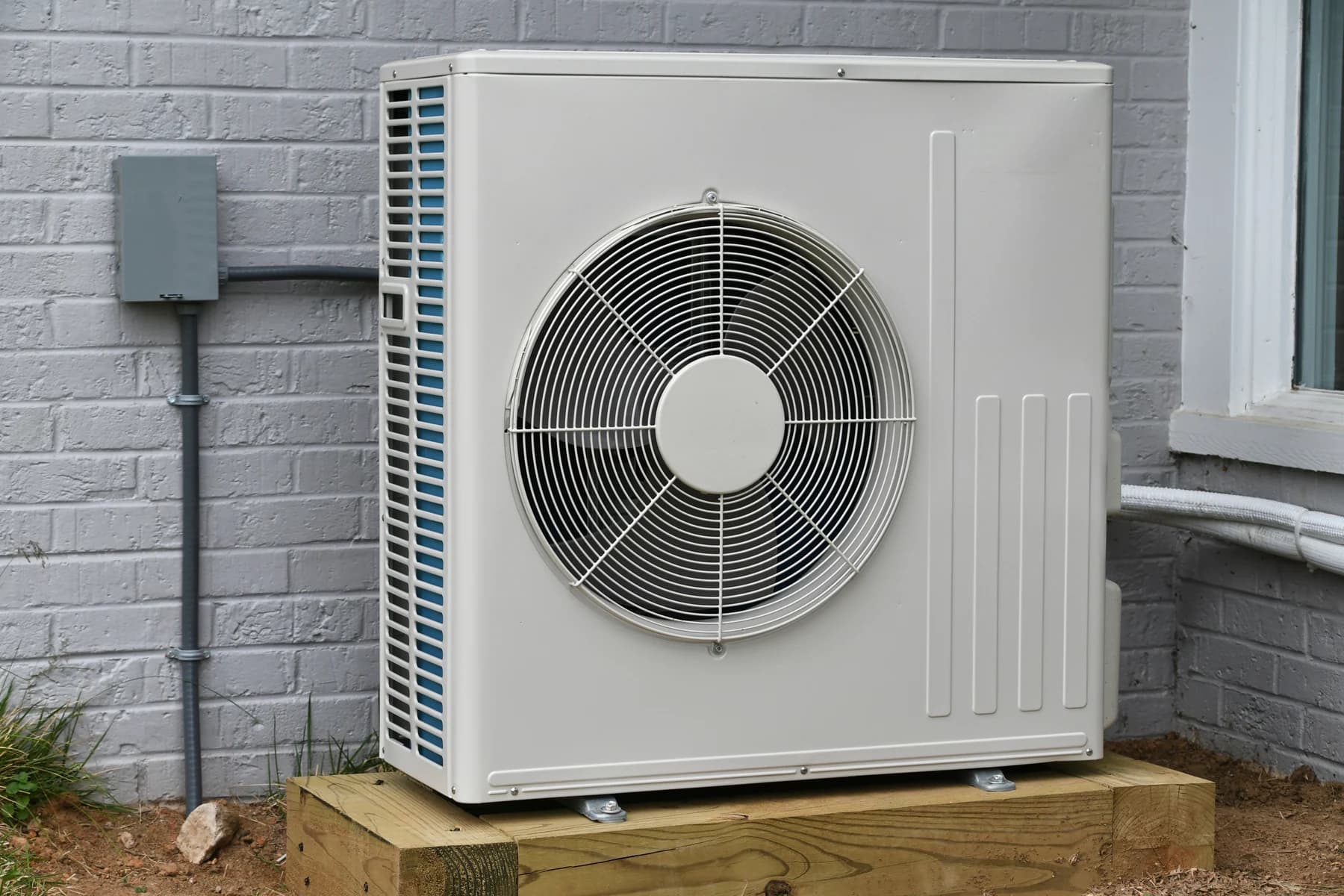
Noise is the number one source of regret, and it is also the easiest thing to check before signing. Hydro-Québec puts it plainly: the noise a heat pump makes can tip the balance, and the municipal by-law should be checked before choosing where the outdoor unit goes.
Maintenance and warranty are settled at the same moment. Ask what the parts warranty covers, what the labour warranty covers, and what you must do to keep them valid. Maintenance that is required but never done is a warranty lost.
References : Hydro-Québec ↗
Comparing two units on the same basis
| What to compare | What to clarify with the professional |
|---|---|
| Capacity | Capacity at -8 °C, rooms served, and what the sizing was based on |
| Deep cold | Capacity left, defrost function, backup provided for |
| Noise and location | Stated decibels, setbacks, municipal by-law |
| Maintenance and warranty | Required maintenance, parts and labour warranty |
Your preparation checklist
Frequently asked questions
- How many BTU does my home need?
- Hydro-Québec gives a benchmark: 15,000 BTU/h for a 750 square foot home. That is an order of magnitude, not a calculation. Real sizing accounts for insulation, windows, the number of storeys and the rooms the unit has to serve. Hydro-Québec ↗
- Wall-mounted or central?
- The question is settled by whether there are ducts. With no duct network, a wall-mounted or multi-zone system installs without redoing everything. With ducts in good shape, a central system serves the whole house. In both cases, have it explained which rooms will actually be heated. Hydro-Québec ↗
- Are there models to avoid?
- Nobody can answer that for you with a brand name. What can be verified is factual: is the unit on the program’s eligible list, what is its capacity at -8 °C, does it have on-demand defrost, and what is its sound level. A unit that fails those questions is a poor choice whatever the brand. Hydro-Québec ↗ · Hydro-Québec, LogisVert ↗
- Can I remove my baseboards?
- No. Hydro-Québec recommends keeping a backup heating source: the heat pump reaches its limits during periods of intense cold. The normal Quebec system is a heat pump plus a backup. Hydro-Québec ↗
Sources and references.
- Hydro-Québec : Sept points à considérer avant d’acheter une thermopompe ↗Quebec
- Hydro-Québec : Programme LogisVert, clientèle résidentielle ↗Quebec
Conditions and rules may change; consult the relevant organizations for your project. The questions, tables and examples are preparation tools provided by Projet Maison 360. Source titles and links are in French.